
Little Rock, AR · Garage Door Service
Why Most Little Rock Garage Doors Need the Same Three Repairs
Most Little Rock garage doors date to the 1975-2001 building boom. Here's what that means for springs, openers, and cold-weather seals in this area.
- Repairs & new doors
- Springs & openers
- Serving 8 nearby communities
What Local Conditions Do
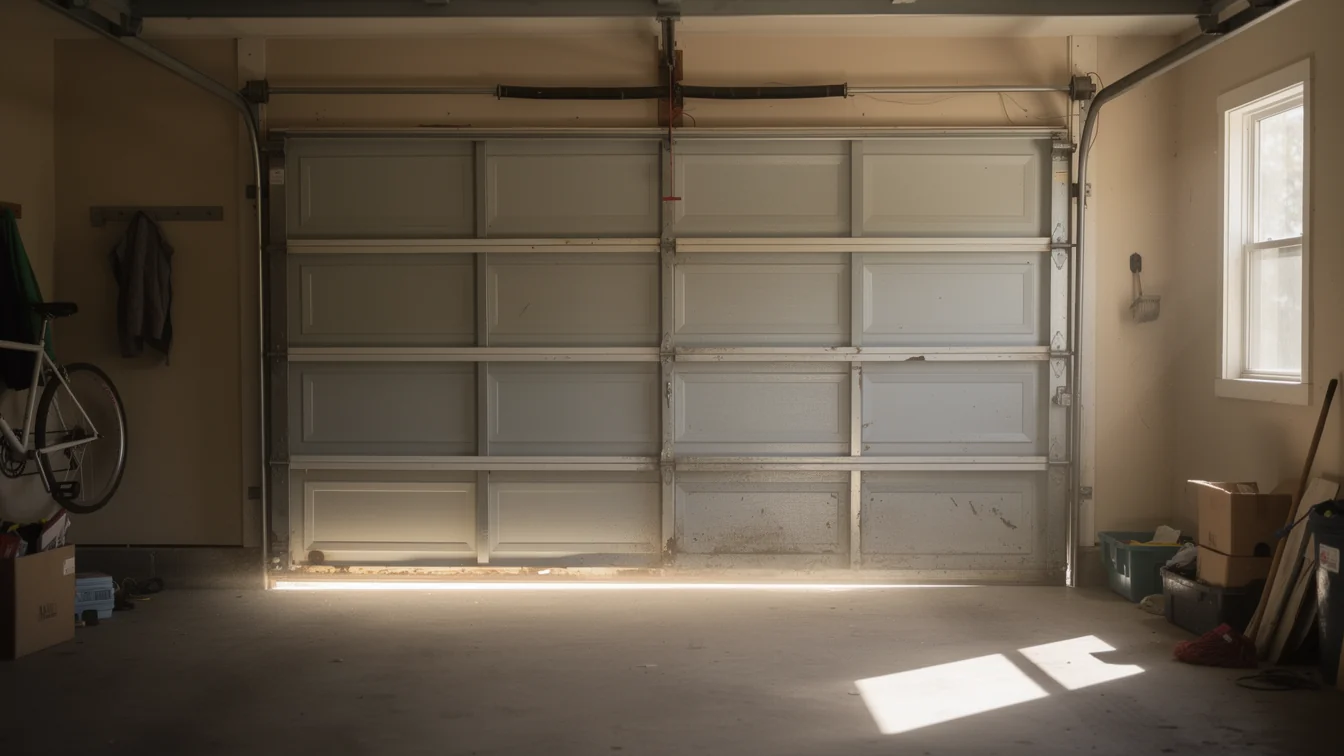
Little Rock sits in a cold-moderate climate band, not the deep freeze of the upper Midwest, but enough swing between a humid summer and a hard winter night to work rubber and steel hard over the years. A garage door built around the 1985 median for this area has gone through close to forty years of that cycle. The bottom seal hardens and cracks first. Then the torsion spring, which was never rated to last forever anyway, starts to lose tension a little faster than it would in a mild coastal town. Galvanized track and hardware from that era holds up fine structurally, but the finish wears thin near the rollers where moisture collects after a freeze-thaw week. None of this is dramatic. It's slow. An owner usually notices it as a door that's gotten louder, or harder to lift by hand when the opener is unplugged, long before anything actually breaks. That gradual wear pattern is the real story in this climate band - not sudden failure, but hardware that's been quietly losing margin for two or three decades and finally runs out of it on an ordinary Tuesday.
What Most People Get Wrong
The 1980s-90s housing stock here isn't limited to one subdivision - it runs across the 17 named areas in and around Little Rock, from Boyle Park and Hillcrest in close, out through Sherwood, Bryant, and Jacksonville a bit farther off. Because the build era is so consistent across the whole service area, owners assume their door problem is unique to their house when it's actually the same part failing on thousands of nearly identical doors put up the same decade. The mistake is treating every symptom as an opener problem. A door that reverses on its own, or that the opener strains to lift, is very often a spring that's lost tension - original equipment from the build year finally giving out - not a logic board issue. People spend money on a new opener unit when the real fix is a $150-and-up spring job, then wonder six months later why the new opener is still straining. The fix order matters: springs and cables first, since they carry the physical load, then the opener, which only has to move a door that's properly balanced.
What to Look At First
If your house falls in the 1975-2001 build window that covers most of this area, start with the spring, not the opener. Stand the door open halfway by hand with the opener disconnected. If it doesn't hold position and starts to drift down, the torsion spring is under-tensioned - common on a door this age - and that's a job for someone with winding bars, not a DIY fix. Next, look at the bottom seal and the weatherstrip along the sides. On a mid-80s build, these have usually been replaced once already, but if they're still original, they're brittle and letting in more cold air than the door was ever designed to block. Third, check the track bolts at the wall bracket. Decades of vibration loosen them, and a door that's started walking sideways in the track almost always traces back to this, not to a bent panel. None of these checks require tools beyond a flashlight and a ladder, but none of them are reasons to put off a call once you've found the problem - a loose track bolt left alone turns into a bent track.
The Problem
Across the households this area covers - 98,038 of them, with 46,149 owner-occupied houses - the garage door is usually original or close to it, installed the same decade the house was built. That means a huge share of the doors in service right now are somewhere past their expected spring life, and a fair number of openers are old enough that replacement parts for the specific circuit board are no longer made. With a median household income of $69,525 here, most owners we talk to want the repair that fixes the actual failure, not a full door swap, and most of the time that's the right call - a spring, a cable, or a set of rollers costs a lot less than a new door and solves the problem just as completely. Where we draw an honest line: if your opener is original to a 1980s build and the control board has failed, we often can't source an exact replacement for that unit, and at that point swapping the whole opener is cheaper and more reliable than hunting for a discontinued part.
Frequently asked questions
My garage door is from the 1980s - is it worth repairing or should I replace it?
Depends what's failed. A spring, cable, roller, or seal is almost always worth repairing on a door this age, since the panel and track are usually still sound. If the opener's control board has failed and it's original equipment, replacement parts for that specific board often don't exist anymore, and a new opener ends up being the more reliable fix.
Why does my door seem harder to lift in the winter?
Cold tightens steel springs slightly and stiffens old rubber seals, so a spring that's already lost some tension from age will feel noticeably worse on a cold morning than it does in July. If the door won't hold halfway open by hand with the opener off, the spring needs attention, not just the opener.
Are garage door problems different across the Little Rock area, or pretty much the same everywhere?
Pretty consistent. Most of the houses across this area, including Boyle Park, Hillcrest, Oak Forest, and the areas farther out toward Bryant and Sherwood, were built in the same 1975-2001 stretch, so the doors and openers are wearing out on a similar timeline no matter which part of the area you're in.
Related garage door services in Little Rock
More garage door guides
Book garage door service in Little Rock
Call now or request a quote - tell us what the door is doing and where you are.