
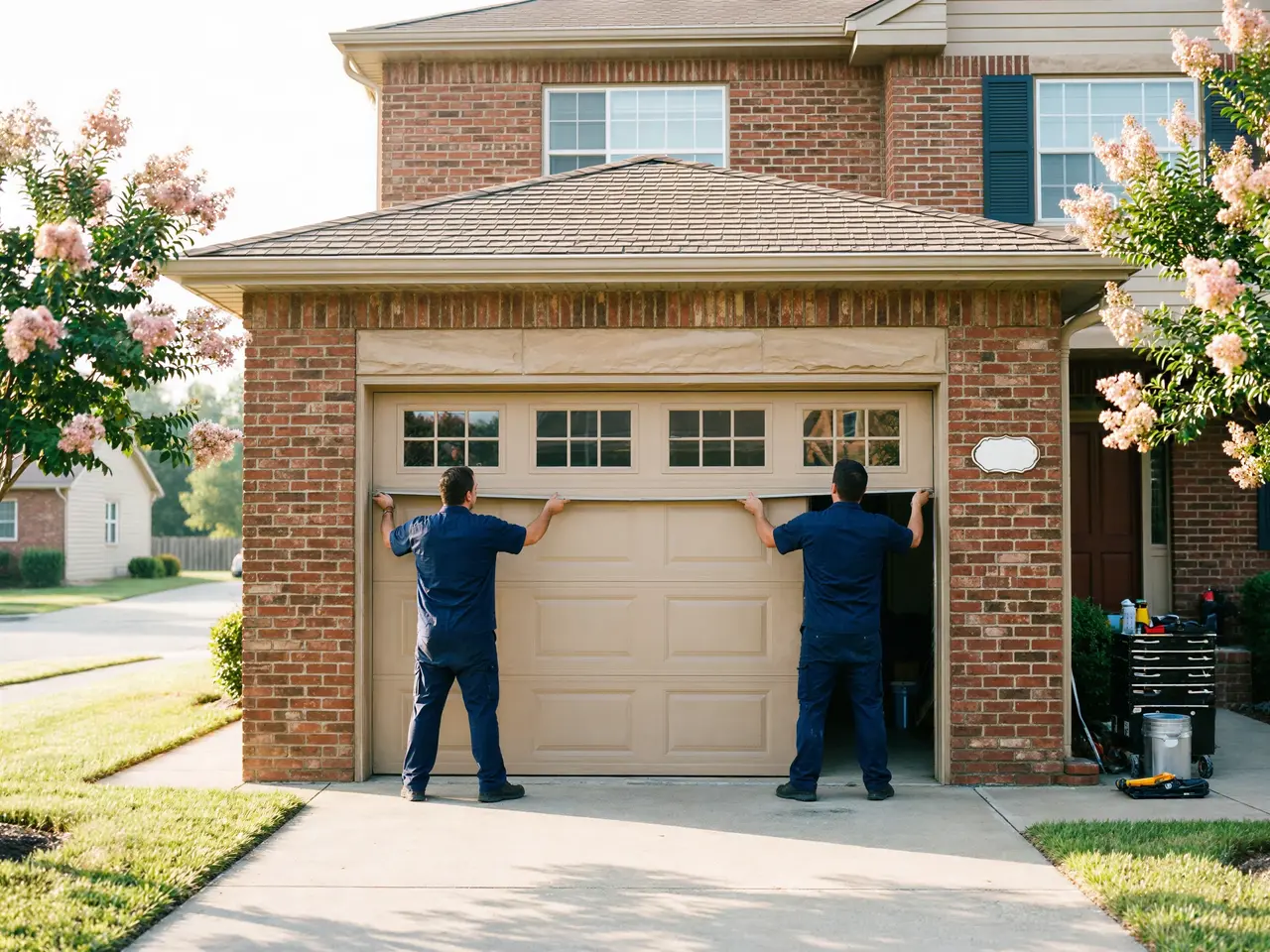
Little Rock, AR · Garage Door Service
Garage Door Installation for Little Rock Homes
Professional garage door installation in Little Rock, AR for homes built 1975-2001. Insulated doors sized for cold winters, installed right the first time.
- Repairs & new doors
- Springs & openers
- Serving 8 nearby communities
How We Fix It
Installing a garage door right starts with the opening, not the door. Across Little Rock's 17 named areas, most houses went up between 1975 and 2001, with the median build year around 1985. That means we're almost always working with an opening and track system sized to that era's standards, not today's. We measure the jamb, header, and headroom before we quote anything, because a lot of those original openings are an inch or two off from what a new stock door assumes.
For the door itself, we spec insulated steel or composite panels rated for a cold-moderate climate, not the single-layer doors that shipped standard when these houses were built. We set new track, rollers, and torsion hardware to match the door weight rather than reusing thirty-five-year-old springs sized for a lighter panel. The opener gets mounted and wired to current standards, with the safety sensors placed where they belong - something plenty of older installs skipped entirely.
One thing we won't do: force a one-size door into a nonstandard 1980s opening just to save a trip. If the frame's out of square or the opening doesn't match a stock size, we say so before we order anything.
How It Shows Up
Homeowners usually call us for one of two reasons. Either the door still works but it's clearly done - panels bowed, bottom seal cracked, the whole thing rattling on its track - or they're mid-renovation and the old door just doesn't fit the new plan. In neighborhoods like Hillcrest, Midtown, and Boyle Park, where a lot of the housing stock dates to the 1980s and 90s, we see a specific pattern: the original door is still technically functional but it's an uninsulated single layer that never belonged in a cold-moderate climate in the first place.
Other times it's simpler - the opener finally quit, and once you're pricing a new opener against a thirty-plus-year-old door, replacing both starts to make more sense than patching one. We also get calls where the door was replaced once already with a mismatched size, and it's been dragging on misaligned track ever since. That's an installation problem wearing a repair costume, and no amount of adjusting the limit switch fixes a door that was never the right size for the frame.
What Causes It Around Here
The root of it is age and climate overlapping. With median housing construction around 1985 across the service area, a huge share of garage doors in Little Rock are original equipment that's now pushing forty years old. Steel from that era wasn't insulated the way doors are built today, and in a cold-moderate climate, that difference shows up as a garage that's noticeably colder than the rest of the house and a door skin that's prone to denting and flexing after decades of temperature swings.
Scale matters too. The service area covers 98,038 households, 46,149 of them owner-occupied houses, and most of that stock shares the same construction window. That's not a coincidence tied to one street - it's a whole band of Little Rock built in the same twenty-five year stretch, with the same era of hardware aging out at roughly the same time. When one door on a block needs replacing, the house next to it usually isn't far behind, because they were built to the same spec in the same decade.
The Complications
Not every install is a straight swap. Openings built to 1980s and 90s dimensions sometimes fall between today's standard sizes, which can mean a custom-width door and a longer lead time than a stock size - we'll tell you up front if that's the case rather than let you find out at delivery. Older openers on original wiring sometimes need an electrical upgrade before a new opener can go in safely, which isn't part of the door job itself and adds a step.
With a median household income of $69,525 across the service area, most of the calls we get are owners trying to make one good decision instead of patching the same door every couple of years - but that means budget and timeline both matter, and we'd rather be honest that insulated doors and custom sizing cost more than a bare steel panel than oversell something cheaper that won't hold up to another cold-moderate winter.
We also won't install over a frame that's rotted, out of square, or structurally compromised - that's carpentry work that has to happen first, and doing the door before the frame is fixed just means redoing it later.
Frequently asked questions
Do you install garage doors in older neighborhoods like Hillcrest or Midtown?
Yes. Those areas, along with most of the service area, sit on housing built between 1975 and 2001, so we're used to matching new doors and track to openings sized for that era rather than assuming a modern stock size will drop right in.
Why does my 1980s garage door feel so cold in winter?
Doors from that era were usually single-layer steel with no insulation. In our cold-moderate climate, that means the garage runs noticeably colder than the rest of the house. An insulated replacement panel addresses that directly - weatherstripping alone won't.
Will a new door fit my existing opening without changes?
Often yes, but not always. A lot of openings from the 1980s and 90s fall outside today's standard sizes. We measure before quoting so you know up front if you need a custom-width door, which does add cost and lead time.
Is it ever better to repair instead of replace?
If the opener and track are sound and the panel damage is cosmetic, repair can make sense. We won't push a full install on a door that still has useful life left - but once the panel's original steel is 35-40 years old, repair usually just delays the same job.
Book garage door service in Little Rock
Call now or request a quote - tell us what the door is doing and where you are.