
Little Rock, AR · Garage Door Service
What Actually Happens When We Come Look at Your Door
A real look at what a garage door service call covers in Little Rock, from 1980s torsion hardware to cold-snap spring failure across the area's 17 named neighborhoods.
- Repairs & new doors
- Springs & openers
- Serving 8 nearby communities
What Local Conditions Do
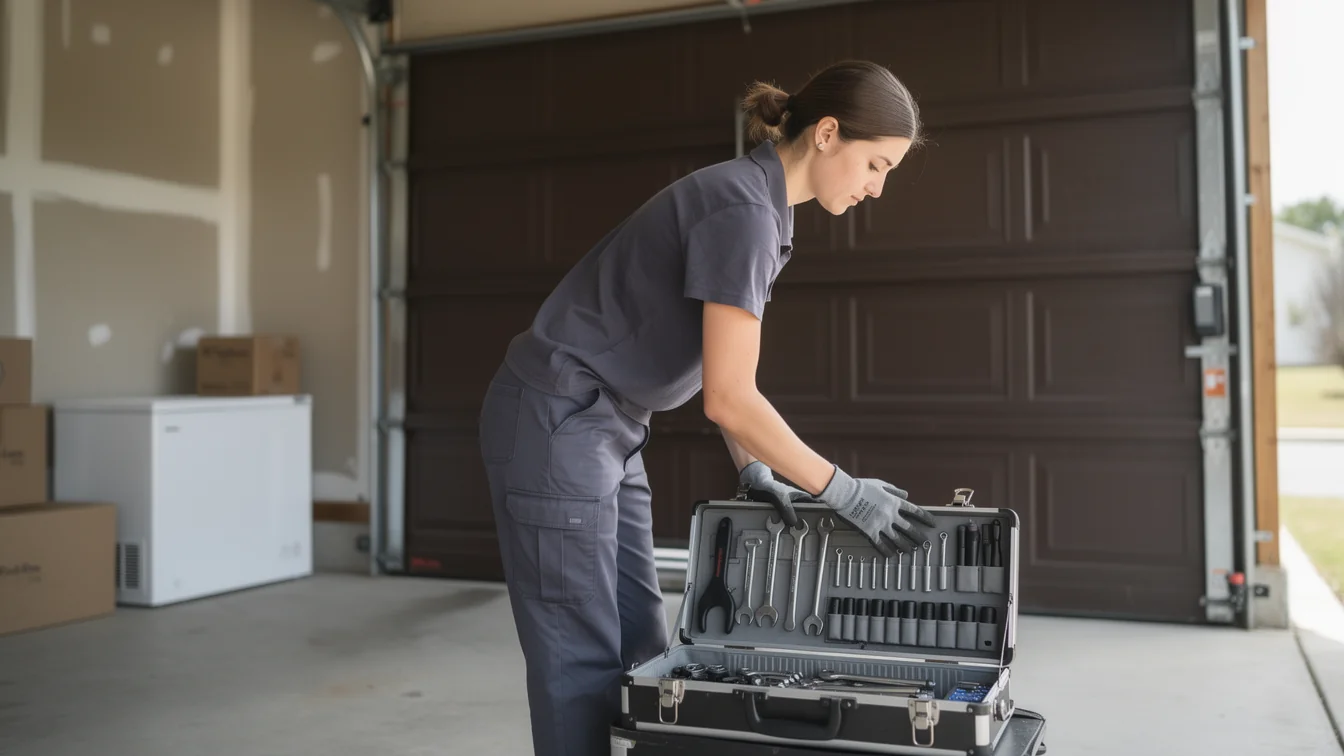
Most of the housing stock we work on in this service area went up between 1975 and 2001, with the median build year sitting around 1985. That means a lot of doors are on their second or third opener but still running original track and hinge hardware from the builder spec of that era. The region sits in a cold-moderate climate band, which doesn't mean brutal winters every year, but it does mean enough freeze-thaw swings each season to work moisture into bearing plates and stiffen lubricant in springs that haven't been serviced. A door that opens fine in October can bind or hang up by January because the temperature swing changed how the torsion spring and rollers are behaving, not because anything broke outright. When we get a call, the first thing we're doing is matching the door's age and hardware generation to what we'd expect from a house built in that window, across any of the 17 named areas we cover - whether that's an older section near Hillcrest or a newer build out toward Maumelle. That context shapes what we bring on the truck before we ever touch the door.
What Most People Get Wrong
The most common mistake is assuming a noisy door needs a new opener. Nine times out of ten on a house from the 1980s-90s stock that makes up most of this area, the noise is rollers and hinges that have never been lubricated, not a motor problem. People also assume replacement is always the safer bet, but with median household income around $69,525 across the service area, a repair that holds for several more years is usually the better call than a full door swap, and we'll say so even when it means a smaller invoice. Another one: owners wait until a spring fully snaps before calling, when a spring already showing rust or uneven coil gaps was telling them something weeks earlier. We're honest that we can't always catch a spring before it goes - sometimes the first sign is the door not moving at all. What we can do is tell you, once we're out there, whether the rest of the hardware is original builder-grade stock that's due for failure soon, or newer parts from a prior repair that still have life in them.
What to Look At First
Before we touch springs or the opener, we look at the track alignment and the condition of the bottom brackets, because on houses from the 1975-2001 build window those are usually original and they take the most wear. We check whether the torsion spring is sized right for the door - a surprising number of doors in this area have a spring that was swapped once before and not matched to the door weight, which shortens its life. We also look at how the door has handled the area's freeze-thaw cycles: condensation staining on the bottom panel or rust bloom on the spring coils both point to moisture getting in during cold snaps rather than anything the owner did wrong. None of this takes long to check, but skipping it is how a shop ends up replacing a cable when the real issue was a bent track pulling it off the drum. We'd rather spend the first ten minutes looking than the next hour fixing the wrong part.
The Problem
The real problem on a lot of these calls isn't the part that failed, it's the gap between when a part started failing and when someone noticed. A torsion spring rated for a certain number of cycles doesn't announce itself until it's near the end, and a door installed when the house was built in the 1980s or 90s has likely never had that spring replaced. Add the area's cold-moderate swings, which stiffen grease and shrink metal tolerances in winter, and a marginal spring or worn roller that was fine in summer turns into a Saturday morning the door won't open at all. We can't predict the exact week a 30-to-40-year-old spring will go. What we can do is tell an owner honestly, during any visit, whether their spring or hardware is in that late-life window so the failure isn't a surprise.
Frequently asked questions
Do you work on doors from the older sections of town near Hillcrest or Midtown?
Yes. A lot of those homes have original hardware from when the house was built, and that older torsion and track setup is common across this service area's 1975-2001 housing stock. We bring parts suited to that era, not just newer opener-focused kits.
Why did my door suddenly get hard to lift this winter?
The region's cold-moderate climate swings stiffen spring lubricant and tighten metal tolerances enough that a spring or roller already near the end of its life will show it first in cold weather. It's usually a sign the part was already marginal, not a new problem caused by the cold alone.
Is it ever not worth repairing?
Sometimes, yes. If the door itself is warped or the track has been bent in more than one place, putting new hardware on it doesn't fix the underlying problem. We'll tell you when replacement makes more sense than another repair.
Will you tell me if my spring is original to the house?
We'll give you our best read based on wear, coil condition, and what's typical for a house built in this area's common 1975-2001 window, though we can't know the exact install date unless there's a record of a prior repair.
Related garage door services in Little Rock
More garage door guides
Book garage door service in Little Rock
Call now or request a quote - tell us what the door is doing and where you are.