
Little Rock, AR · Garage Door Service
Deciding Whether to Repair or Replace a Garage Door in Little Rock
A look at whether 1980s and 90s garage doors common across Little Rock's neighborhoods are worth repairing, based on the area's housing stock and climate.
- Repairs & new doors
- Springs & openers
- Serving 8 nearby communities
What Local Conditions Do
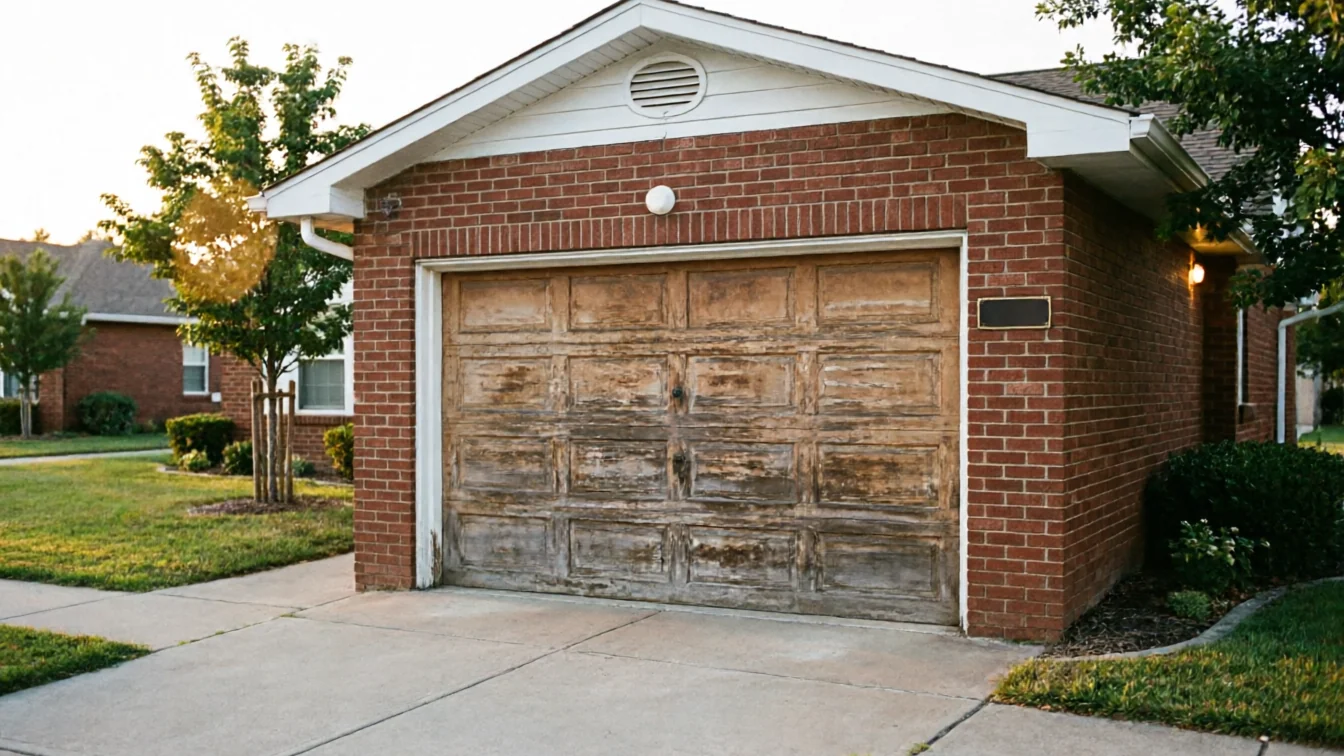
Most of the housing stock across this service area went up between 1975 and 2001, with a median build year around 1985. That matters more than people think. A door from that era is almost always steel, almost always on a torsion spring sized for the lighter panel weights builders used back then, and almost always original - because garage doors in houses this age are usually the first and only one the house has had. The climate band here is cold-moderate, which isn't brutal, but it's enough freeze-thaw cycling over 35-40 years to stiffen factory lubricant in rollers and hinges, pit springs that were never galvanized, and warp wood trim pieces where doors have them. None of that is dramatic. It's just slow wear that adds up in a door this old faster than it would in a newer one. Neighborhoods like Boyle Park, Hillcrest, and Midtown sit close enough to the center of the service area that they share this same building-era profile, as do the farther-out pockets like Rock Creek and Upper Baseline. The door in front of you right now is very likely doing the job it was built for, just with 40-year-old hardware underneath.
What Most People Get Wrong
The common mistake is treating every noise or sag as a sign the whole door needs to go. A door built in the mid-1980s to late-1990s range, which describes most of what's on these streets, was built with heavier steel and simpler mechanisms than what's sold today. That's often a point in its favor, not against it. People hear a spring snap and assume the door is finished, when a torsion spring is a known, bolt-on part regardless of the door's age. The other mistake runs the other way: assuming an old door can always be nursed along. Steel panels from this era were painted, not powder-coated the way current doors are, and once rust gets past the paint on a 35-40 year old panel, there's no patching it - the steel underneath is already thinning. Across the 17 named areas that share this 1980s-90s stock, from Oak Forest to Wakefield to 65th Street West, we see both mistakes about equally. Knowing which one you're making starts with looking at the actual parts, not the age on paper.
What to Look At First
Start with the springs, not the opener. On a door from the 1980s or 90s, the torsion spring has had three to four decades of cycles, and spring failure looks sudden even though the wear was gradual. If the door won't lift evenly, or one side drops faster than the other, that's a spring or cable problem, not a reason to replace the whole unit. Next, check the bottom panel and the track where it meets the slab. Houses in this build range often sit on grade without much of a drainage slope near the garage, so the bottom few inches of an original steel door are where rust starts first. Run a hand along the inside of that panel - if it flexes or feels soft, that's thinned steel, and no amount of spring or roller work fixes it. Last, look at the rollers themselves. Original steel rollers from this era are noisy and stiff by year thirty, but noise alone isn't a replace signal. A door with a solid panel, straight track, and tired rollers is a repair. A door with a soft or rusted-through bottom panel is not.
The Problem
The honest problem is that we can't give you a universal rule, because it depends on which part failed. A snapped spring or a worn roller on a sound steel panel from the 1985-ish median build year is almost always worth fixing - the labor and parts cost is a fraction of a new door, and the panel itself, if it's not rusted through, will likely outlast another set of springs. What isn't worth fixing is a bottom panel that's gone soft with rust, or a door where the track has pulled away from a jamb that's shifted with the house over three-plus decades - at that point you're patching a structural issue, not a mechanical one. One limitation worth saying plainly: matching steel panel profiles and finishes from doors this old isn't always possible, since manufacturers have changed panel widths and embossing patterns over the years. If one panel on an otherwise sound door needs replacing, sometimes the better call is a full new door rather than a mismatched panel that will show. We'd rather tell you that up front than sell you a patch job that looks wrong in six months.
Frequently asked questions
My garage door is from the 1980s - is it too old to repair?
Not on its own. Age alone doesn't disqualify a door; condition does. A steel door from that era with a sound, non-rusted panel and straight track is usually a good repair candidate even after 35-40 years. What ends the conversation is rust-through on the bottom panel or a track pulled out of alignment by the house settling.
Why did my spring break with no warning?
Torsion springs wear out through cycle count, not calendar time, and that wear is invisible until the spring gives out. On a door built in the mid-1980s to 1990s range, which is most of the housing stock here, a spring has had three to four decades of daily cycles behind it by the time it snaps.
Can you match the panel on my original door if only one is damaged?
Sometimes, but not always. Panel widths and embossing patterns have changed across manufacturers over the decades, so an exact match for an older door isn't guaranteed. If we can't match it cleanly, we'll tell you, and a full door may be the better call than a visibly mismatched panel.
Related garage door services in Little Rock
More garage door guides
Book garage door service in Little Rock
Call now or request a quote - tell us what the door is doing and where you are.