
Little Rock, AR · Garage Door Service
Why a Garage Door Goes Off Track Around Little Rock
Little Rock homes built mostly between 1975 and 2001 have track hardware that shifts with age and cold snaps. Here's what actually knocks a door off its rails.
- Repairs & new doors
- Springs & openers
- Serving 8 nearby communities
What Local Conditions Do
Most of the housing stock around Little Rock went up between 1975 and 2001, with the bulk of it dating to the 1980s and 90s. That's old enough for the original track brackets and roller hardware to have worked loose from thirty-plus years of seasonal temperature swings, but not so old that homeowners expect to be dealing with it yet. The climate here sits in a cold-moderate band, which means the garage sees real freeze-thaw cycles in winter and humid heat in summer. That swing matters more than people think. Steel track expands and contracts, lag screws in the jamb back out a sixteenth of an inch at a time, and the horizontal and vertical track sections that were plumb and square when the house was framed slowly stop agreeing with each other. On a door that's original to a 1985-built house, you're looking at close to four decades of that cycle. None of this shows up as a sudden failure. It shows up as a door that rides a little rough, then rubs on one side, then finally jumps the roller off the rail on a cold morning when the steel is stiffest and least forgiving.
What Most People Get Wrong
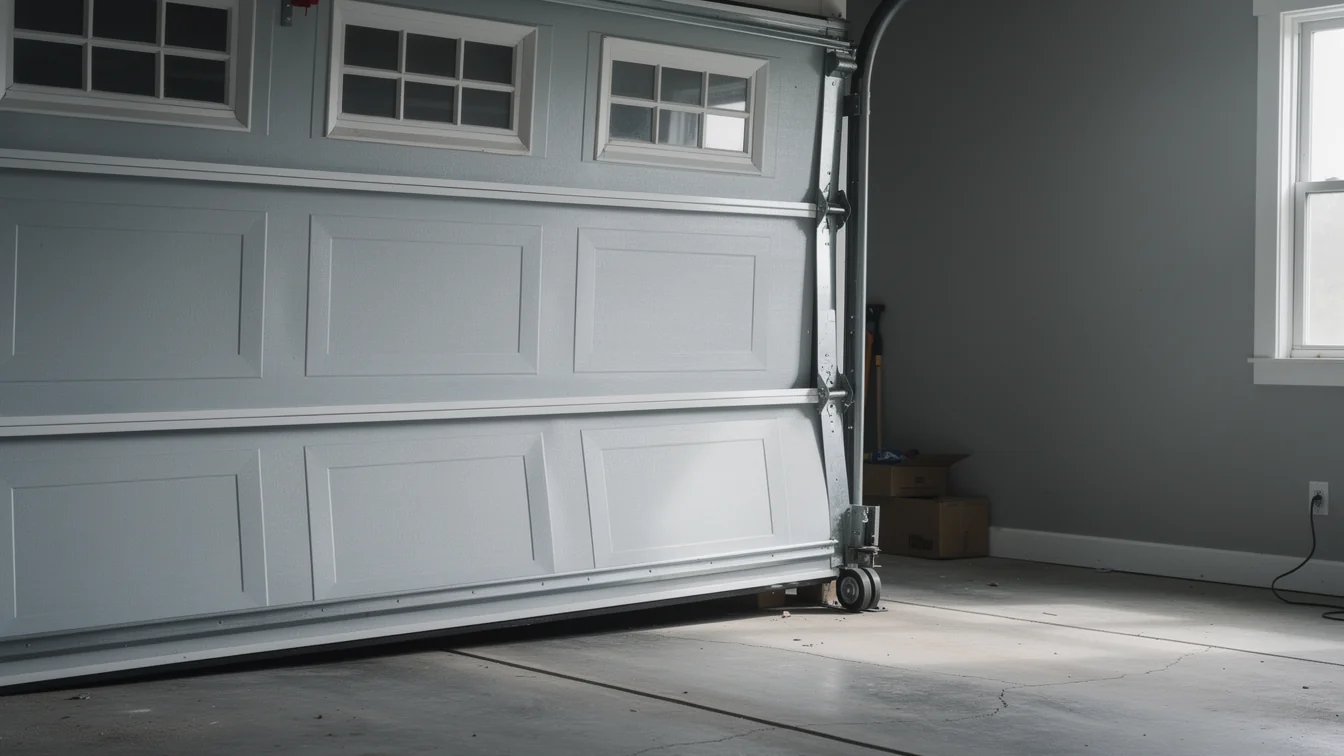
The common mistake is treating a door that's rubbing or chattering as a lubrication problem. Spraying the track or the rollers can quiet things down for a week, but if the track itself has drifted out of alignment, which is common in houses built in that 1975-2001 window across this area, lubricant just masks the symptom while the roller keeps riding the edge of the rail instead of the center. Another mistake is assuming a door that's gone off track once will go back on and stay there with a shove and a mallet. Sometimes that works for an afternoon. It doesn't fix whatever caused the bracket to loosen or the track to bow, so the same door comes off again, usually at a worse moment. People also tend to ignore a door until it's fully derailed, when the warning signs - a roller that looks tilted in the track, a gap between the track and the wall bracket, a door that visibly leans when it's two-thirds up - were there for weeks.
What to Look At First
Start at the brackets that hold the vertical track to the frame. On a house from the 1980s or 90s, these are usually the original hardware, and lag screws into wood jambs back out gradually - you can often see daylight or movement at the bracket before the door ever leaves the rail. Next, sight down the length of the track itself. A track that's bowed inward or pulled away from the wall by even a quarter inch will walk a roller off the lip over time. Check where the horizontal track meets the curve near the ceiling; that joint takes the most stress every time the door opens and is a common point of separation on older installations. Finally, look at the rollers themselves - if they're the original steel rollers rather than nylon, three-plus decades of use plus cold-weather stiffness in this climate band means they're worn narrower than the track groove was cut for, and a worn roller rides loose enough to jump.
The Problem
Once a door is off track, the risk isn't cosmetic. A door hanging on one cable with rollers out of the rail is unbalanced, and forcing the opener to run it anyway puts strain on the opener motor and the remaining hardware that it wasn't built for. We don't recommend trying to re-seat a door on its own, especially with the spring still under tension - that's where people get hurt. If the track is bent rather than just loose, straightening it is sometimes possible, but a track that's bowed badly enough to drop a door usually isn't worth saving once you add up the labor against the cost of new track and brackets. On original hardware from a 1980s build, replacement is often the more honest answer.
Frequently asked questions
Why does my garage door only go off track in cold weather?
Steel track and roller hardware contract in cold temperatures, and in this area's cold-moderate climate band that happens every winter. If brackets or track are already slightly loose from age - common on houses built in the 1975-2001 window around here - the contraction is often what finally lets a roller slip past the edge of the rail.
Can I just push the door back onto the track myself?
You can sometimes reseat a roller if the door is down and the opener is disconnected, but if the spring is still under tension, don't try it. A door that's come off track with the spring loaded can drop or swing unpredictably. This is one job where calling for a hand is worth it.
Is a bent track always worth fixing on an older door?
Not always. On original hardware from a 1980s or 90s build, the track and rollers have usually had thirty-plus years of wear before a bend happens. If the bend is minor, straightening can work. If it's significant, the labor to straighten often costs close to replacing the track and rollers outright, so we'll tell you straight which way the numbers go.
Related garage door services in Little Rock
More garage door guides
Book garage door service in Little Rock
Call now or request a quote - tell us what the door is doing and where you are.