
Little Rock, AR · Garage Door Service
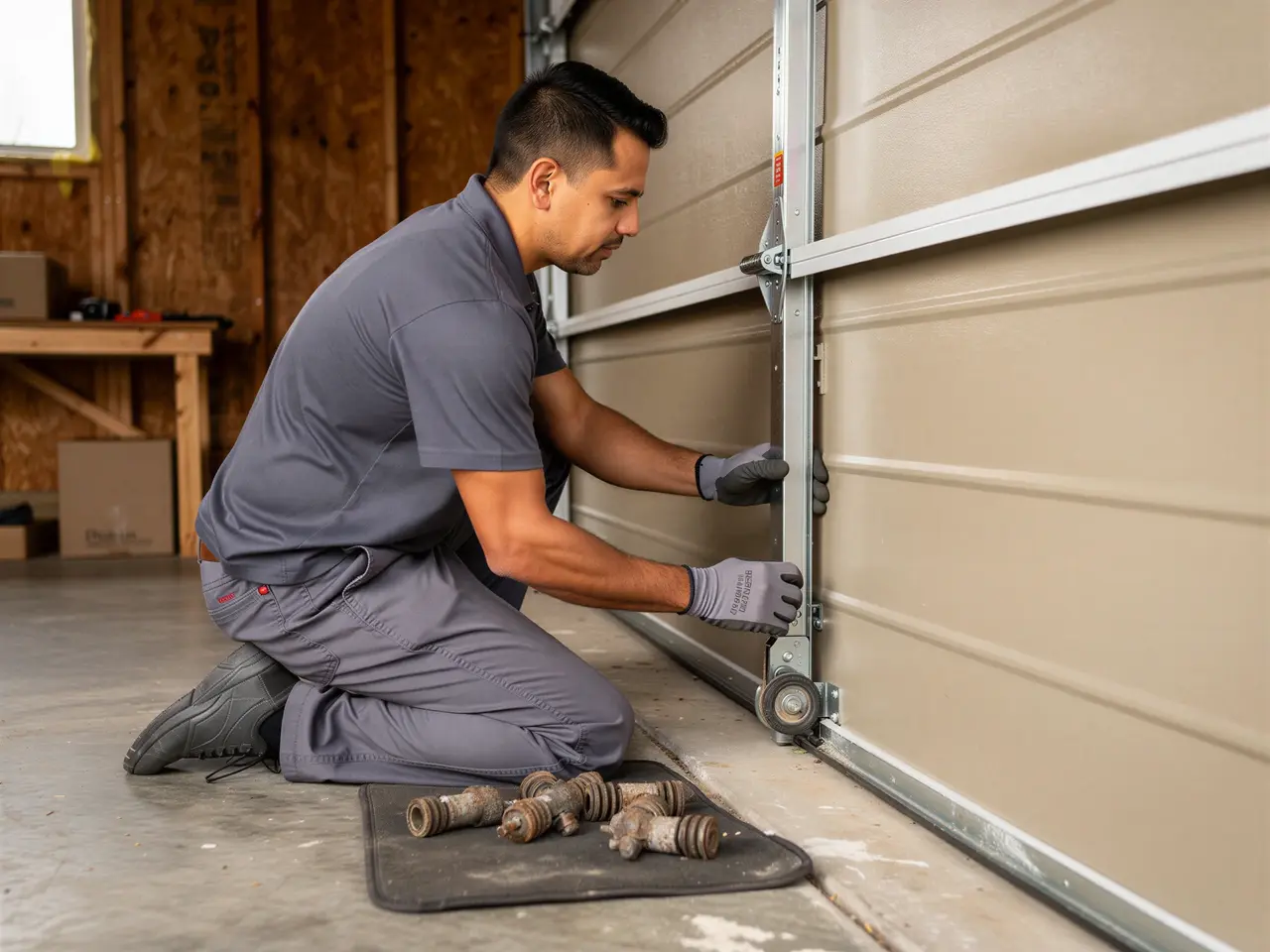
Roller Replacement for East End's Newer Garage Doors
East End's houses mostly went up around 1997, putting original rollers near the end of their life. We bring the parts and tools out from Little Rock to fix it right.
- Repairs & new doors
- Springs & openers
- Serving 8 nearby communities
How Long You Are Without the Door
We don't run a shop in East End - the truck comes out from Little Rock, about 12 miles up the road. That means we're not going to promise you a same-hour fix just because you called. What we can tell you is that roller replacement itself is one of the quicker jobs in this trade once the technician is on site and has the right parts loaded: it doesn't touch the spring system or the opener wiring, just the track-side hardware. A full set on a double door usually means the door is down for part of an afternoon, not a day. If the track also needs straightening or the rollers turn out to be seized into bent brackets, that adds time, because now we're diagnosing a second problem instead of swapping a known part.
What Causes It Around Here
East End's housing sits newer than a lot of the broader service area - median build year here runs around 1997, versus the 1975-2001 spread across the wider Little Rock market. That means most garage doors here are factory steel sectional units from the late '90s or early 2000s, built with the nylon or stamped-steel rollers that were standard for that generation, not the older heavier hardware you'd find on a 1970s door. Nylon rollers of that vintage are typically rated for somewhere in the 10,000-cycle range, and a door opened twice a day for 25-plus years is well past that number by now. Add the region's cold-moderate climate swing - temperature changes that make steel tracks contract and expand through the winter - and roller wear shows up as the stem wearing oval in the bracket, not just the wheel going flat.
How It Shows Up
The most common complaint we hear is noise that wasn't there before - a grinding or popping sound as the door travels, usually worse on one side than the other. Sometimes it's a door that hesitates or jerks at the same spot on the track every time, which tells you a specific roller has worn down enough to catch rather than roll. On older nylon rollers from this build era, you'll sometimes see small plastic shavings or a dusty residue at the base of the track - that's the roller wheel wearing away against the galvanized steel. If the door is binding hard enough that the opener strains or reverses on its own, that's usually past a simple roller job and into track or spring territory, which is a separate diagnosis.
How We Fix It
We replace the worn rollers with sealed-bearing steel or nylon units sized to the track width on your door - most doors built in East End's 1990s wave use a standard 2-inch track, so parts fit without modification. Each roller comes out one at a time with the door supported, so the cables and springs stay under control the whole time; we don't pull the whole door off track to do it. While we're in there we check the roller brackets for wear from the stem rubbing against them, since on a door this age the bracket is often as worn as the roller itself, and a new roller in a worn bracket will just wear out again fast.
The Complications
The honest limitation here: roller replacement doesn't fix everything that makes a door sound rough. If the track itself is bent - from age, a car bump, or just decades of cycling - new rollers will still bind on the bad section, and that's a track repair or replacement job, not a roller swap. On a 1997-era door, we're also seeing original torsion springs reaching the end of their rated cycle life around now, and a worn spring can mimic roller noise closely enough that homeowners call about one and it turns out to be the other. We'll tell you straight if what you're hearing isn't what you called about.
What It Costs
We don't have a published flat rate to quote here without seeing the door - roller count, roller type, and whether the brackets need replacing all change the number. What we can say is that a standard roller swap on a double door, with no track or bracket damage, is one of the more affordable repairs we do compared to spring or opener work. We'll give you a number before any work starts, not after.
Frequently asked questions
Are garage doors in East End different from the ones in older parts of Little Rock?
Generally yes. East End's housing stock centers on a 1997 median build year, newer than much of the surrounding service area's 1975-2001 range. That means more factory steel sectional doors with nylon rollers from that era, rather than the older one-piece or hand-built doors you'd find in older neighborhoods.
Do you have a shop in East End?
No. We're based out of Little Rock and drive out to East End, about 12 miles, for every job. There's no local depot or drop-in counter here - we bring the parts and tools with us based on what you tell us when you call.
How do I know if it's the rollers and not the spring?
Roller wear usually sounds like grinding or catching at the same spot on the track and gets louder over weeks. A spring problem tends to show up suddenly - the door feels heavy, won't stay up, or the opener strains hard on every cycle. If you're not sure, describe the sound and we can usually tell which it is before a truck even comes out.
Will new rollers fix a noisy door for good?
If the rollers are the actual cause, yes, and that's most of what we find on doors from this build era. But if the track is bent or the bracket is worn out, new rollers alone won't stop the noise - we'll flag that during the visit rather than sell you a part that won't solve it.
Book garage door service in Little Rock
Call now or request a quote - tell us what the door is doing and where you are.